Author: Dennis

Men want action, not analysis. Learn why high performers are swapping therapy for coaching—and seeing faster, lasting results.

Is Therapy Too Slow? Why Men Choose Coaching Instead

Look man…

If you’re wired to win, you don’t want to talk about your problems—you want to solve them.
That’s why so many men today are walking away from traditional therapy and choosing coaching instead.

Therapy has its place—it’s like rehab for the mind. But coaching? Coaching is training for life.

It’s for men who’ve already been through hell and want to come out sharper, stronger, and more focused on the next fight.

Let’s break down exactly why.


Coaching vs. Therapy: The 5 Key Differences

Comparison PointTherapyCoaching
1. FocusLooks back to heal wounds from the past.Looks forward to build strategies for the future.
2. EnergyReflective and analytical—more talk, less traction.Action-oriented—more doing, less dwelling.
3. Role of the PractitionerTherapist is the guide to self-understanding.Coach is your partner in performance and accountability.
4. GoalsSeeks emotional stability and understanding.Seeks measurable progress and transformation.
5. Time FrameOpen-ended, slow-moving process.Defined timelines with tactical objectives.

1. Focus: Past vs. Future

Therapy helps you process pain. Coaching helps you leverage it.

If therapy asks, “Why do you feel that way?”, coaching asks, “What are you going to do about it?”

Both are valid—but only one gets you back in the arena with a plan.


2. Energy: Reflection vs. Motion

In therapy, you sit. In coaching, you move.

The best coaches don’t let you hide behind analysis paralysis. They challenge your thinking, demand accountability, and force you to act when it counts.

You don’t build muscle by talking about weights. You build it by lifting them.


3. Role: Guide vs. Teammate

A therapist helps you make peace with your story. A coach helps you rewrite it.

Therapy is safe space. Coaching is a training ground—you’re not there to vent, you’re there to evolve.


4. Goals: Understanding vs. Achievement

Therapy aims for healing. Coaching aims for high performance. Therapy helps you feel better. Coaching helps you be better.

For the man who’s already self-aware but still stuck, the next step isn’t deeper reflection—it’s execution.


5. Time Frame: Indefinite vs. Intentional

Therapy can stretch on for years without a clear end game. Coaching operates on a clock. You set milestones, measure results, and track growth.

It’s not about endless exploration—it’s about efficient transformation.


Stat Snapshot

  • 74% of coaching clients report improved relationships and work performance within 3 months.
  • Over 80% of men say coaching made them more goal-oriented and accountable.
  • The average time to measurable results: 8–12 weeks.

So Why Are Men Choosing Coaching?

Because men are tired of waiting for clarity.

They want traction. Tactics. Wins.

They don’t want someone to understand their potential—they want someone to unleash it.

Coaching flips the switch from “Why am I stuck?” to “How do I level up?” It’s not therapy—it’s game film, strategy session, and training camp rolled into one.


Final Recommendation

If you’ve done the work in therapy but still feel like you’re spinning your wheels, it’s time to change the playbook.

Coaching is built for men who are ready to act.

Stop sitting on the sidelines. It’s time to train for life.

Smart men often overthink instead of act. Learn 5 tactical steps to build confidence like muscle and turn intelligence into impact.

Why Smart Men Still Struggle with Confidence

When Brains Betray You

Look man, being smart doesn’t make you confident.

In fact, it can make things worse.

You’ve spent years building intellectual armor—degrees, titles, strategy—but when it’s time to act, your brain turns into a saboteur.

You analyze, rationalize, overthink, and stall. That’s not weakness—it’s the byproduct of intelligence without embodiment.

Confidence isn’t a thought process. It’s a skill.

And like strength, it’s built through reps, not reading.


Step 1: Identify the Mental Weight You’ve Been Avoiding

You can’t build confidence if you’re avoiding friction.
In the gym, progress starts with resistance. In life, it starts with discomfort.

Ask yourself: Where am I playing it safe?
Maybe it’s speaking your truth in meetings. Maybe it’s taking a hard conversation with your partner. Those “reps” you skip are the exact ones keeping you weak.

Quote: “What you avoid becomes your master. What you face becomes your muscle.”

Tactical Move:
Pick one discomfort you’ve been dodging and face it head-on this week. Don’t wait until you feel ready. Lift the damn weight.


Step 2: Trade Perfection for Progress

Smart men get trapped in analysis paralysis. You’ve trained your brain to seek the perfect plan before taking action.
Problem: perfection is paralysis in disguise.

Confidence isn’t about being flawless—it’s about trusting your ability to adapt.

Think like an athlete. No one masters the move before practice. You practice to master the move.

Tactical Move:
Set a 70% rule: when you’re 70% sure, move. Execution > contemplation.


Step 3: Stack Micro-Wins

Confidence compounds like interest. One small win multiplies your belief.

Start micro.
Hit the gym three times a week. Speak up once in every meeting. Ask for feedback instead of waiting for validation.

Each act of follow-through tells your brain: “I can count on me.” That’s the foundation of confidence.

Quote: “Small wins build big belief.”

Tactical Move:
Track daily wins. Not goals, reps. Consistency builds competence. Competence breeds confidence.


Step 4: Rewrite the Inner Script

Intelligence creates sophisticated self-critics.
That inner voice? It’s a bad coach who only yells when you’re down.

Replace the critic with a commander.
When you catch yourself saying, “I can’t,” respond with: “I can train that.”

You’re reprogramming self-talk from judgment to growth—exactly how elite athletes and leaders build mental toughness.

Tactical Move:
Every negative thought gets a counter-command.
From “I don’t know if I can” to “I’m learning how.”


Step 5: Surround Yourself with Accountability

Even the strongest men need a spotter.
You wouldn’t bench-press alone at your max weight—why try to build emotional strength solo?

Coaching isn’t therapy. It’s training.
A great coach sees your blind spots, pushes you harder, and keeps your reps consistent when your mind gets lazy.

That’s why elite performers—CEOs, athletes, special forces—all have coaches. Because self-improvement without accountability is just wishful thinking.

Tactical Move:
Join a program or group that measures your reps.
Not just your goals—your execution.


Checklist: Confidence Training Plan

✅ Identify one avoided discomfort
✅ Move at 70% certainty
✅ Log daily micro-wins
✅ Reframe negative thoughts
✅ Find a coach or accountability system


Inspirational Recap

Confidence isn’t a personality trait—it’s proof of repetition.
It’s forged through friction, discipline, and time.
So if you’ve been trying to “think” your way into confidence, stop.
You don’t think yourself into strength—you train for it.

Why Life Coaches Work When Talk Therapy Doesn’t

Look man…

You don’t need another hour of talking about your childhood—you need a plan.
You’ve analyzed, processed, reflected. Yet, you’re still stuck.
That’s not a lack of insight. That’s a lack of action.

This is where most men hit the wall: therapy helps you understand why you’re stuck; coaching helps you figure out what to do about it.

Let’s break down the difference between talk therapy and life coaching—why one heals the past, and the other builds your future.


Coaching vs. Therapy: The 5 Key Differences

#CategoryTalk TherapyLife Coaching
1FocusExplores your past to understand patterns and pain.Focuses on your future—goals, performance, and growth.
2EnergyIntrospective and reflective.Proactive and tactical. Think locker room, not therapy couch.
3ProcessSeeks healing through discussion and awareness.Drives transformation through structure, accountability, and measurable action.
4OutcomeRelief from pain or trauma.Results, performance, and mastery. The goal isn’t to “feel better,” it’s to be better.
5Role of GuideTherapist is an observer and mirror.Coach is a strategist and teammate—someone who gets in the ring with you.

Here’s the thing…

Both therapy and coaching have their place.
But if you’re a high-performing man who wants to level up—not just heal—then therapy’s reflective pace might feel like walking while your instincts scream run.

You don’t need more analysis; you need execution.
And that’s what coaching delivers.


The Sports Analogy: Training vs. Talking

Imagine you’re an athlete.
Therapy helps you recover from the injury that kept you benched. Coaching helps you build the strength, speed, and mindset to dominate when you’re back in the game.

In other words:

  • Therapy is rehab.
  • Coaching is training camp.
    Both matter. But only one gets you ready to win.

Key Takeaways

  • Therapy heals—it’s about understanding the why.
  • Coaching builds—it’s about executing the how.
  • Men thrive with structure, accountability, and a mission.
  • Coaching transforms reflection into results.
  • The fastest way forward isn’t more talk—it’s better strategy.

Stat Snapshot

  • 78% of coaching clients report improved self-confidence within 3 months.
  • 70% see measurable performance gains at work and home.
  • 86% of men say their coach helped them achieve goals faster than working alone.

(Sources: ICF Global Coaching Study, MULC Client Data)


The Final Recommendation

If you’re wrestling with your inner world, therapy can help you understand it.
But if you’re ready to build discipline, focus, and purpose, it’s time to step into the arena.

Coaching doesn’t replace therapy—it evolves you beyond it.

Stop waiting to feel ready. Start training to win.

What You Lose When You Don’t Have a Coach

What You Lose When You Don’t Have a Coach

The Cost of Going It Alone

Look man, every high performer thinks he can figure it out himself. You’ve built something from nothing — maybe a career, a company, a family. You’ve handled bigger problems than most men can imagine.

But here’s the truth: what got you here won’t get you there.

At some point, the self-reliance that made you strong starts holding you back. You burn hours thinking instead of doing, planning instead of executing. You tell yourself you’re “working on it,” when what you’re really doing is stalling in place.

Without a coach, you lose time spinning your wheels, energy second-guessing every decision, and clarity buried under too many half-baked strategies. You stay busy instead of getting better.

That’s not independence. That’s inefficiency disguised as pride.

The Hidden ROI Killer: Lost Time

Let’s get real. You can earn back money. You can’t earn back years.

If you waste even 10 hours a week chasing the wrong goals, second-guessing, or putting out the same fires over and over — that’s 520 hours a year.

At a conservative rate of $150/hour, that’s $78,000 in lost productivity every year.

Now multiply that over five years of “figuring it out.”
That’s $390,000 gone — without accounting for lost opportunities, missed deals, or the relationships that faded while you were too busy grinding in the wrong direction.

That’s what “doing it alone” really costs.

The Energy Drain

You’re not just losing time — you’re bleeding energy.

Decision fatigue. Burnout. The kind of mental exhaustion that makes even small choices feel heavy. You can’t run at peak output when your mind’s clogged with stress and self-doubt.

A coach acts like your pit crew — tuning your mindset, calibrating your focus, and calling the plays that keep you sharp. Without that external mirror and accountability, your drive turns into drag. You start running out of gas before you even hit the track.

The Relationship Ripple

Here’s a truth most men don’t want to face: when you’re stuck, everyone around you feels it.

Your team senses hesitation. Your partner feels your distance. Your kids see your distraction.

You think you’re protecting them from your stress — but silence isn’t strength. It’s slow decay.

Coaching doesn’t just fix your performance; it recalibrates your presence. It sharpens your leadership, your patience, your ability to connect.

Stat Snapshot: 83% of executives report improved relationships and communication after coaching (Source: ICF Global Coaching Study).

Coaching as an Investment, Not an Expense

A lot of guys still see coaching as a luxury. Something “nice to have” when life calms down. But that’s like a pro athlete saying his trainer is optional.

If you want to perform like a pro, you need the structure, perspective, and accountability that only a coach provides.

The Data Says It All:

  • Average ROI on coaching: 5–7x the investment.
  • 70% of coached professionals report improved work performance.
  • 80% say coaching increased self-confidence and clarity.

That’s not a cost — that’s a return on you.

And you, my friend, are the most valuable asset you own.

The Bottom Line

Here’s the thing: you’re already paying a price — it’s just invisible.

Every delay, every drained day, every missed opportunity compounds. You don’t need another book, podcast, or motivational quote. You need a mirror. A guide. A coach.

You don’t hire a coach because you’re weak. You hire one because you’re done wasting potential.

Coaching vs. Therapy: What’s Best for a High-Performance Mindset?

The Battle for Your Mind

Look man, you don’t sharpen a sword by staring at it. You swing it, grind it, and take a few hits along the way.

That’s the difference between therapy and coaching. One helps you understand your past wounds, the other helps you build new weapons.

If you’re a high-performing man—a business owner, executive, or athlete—your goal isn’t just healing. It’s winning. And to win, you need momentum, not more mental loops.

This article breaks down the core differences between therapy and coaching for men who are ready to perform at their peak.

Coaching: Training for the Next Fight

Coaching is about forward motion. It’s your mental gym. You show up, sweat mentally, and push past your limits with strategy and accountability.

A coach doesn’t ask, “How do you feel about that?”

He asks, “What are you going to do about it?”

Coaching is for men who want structure, measurable goals, and a tactical plan to level up their mindset, relationships, or performance. It’s not about unpacking the past—it’s about engineering the future.

Therapy: Healing from Old Battles

Therapy has its place. It’s a space to process pain, uncover patterns, and understand what shaped you.
If you’re bleeding, you don’t hit the gym—you stop the bleeding first.

But for many high-performing men, staying in therapy too long becomes like sitting on the sidelines after your wounds have healed.

At some point, you have to get back in the arena

5-Point Comparison: Coaching vs. Therapy

CategoryCoaching (Man-UP! System)Therapy
FocusFuture-focused: Builds strategy, goals, and action plans.Past-focused: Explores feelings, trauma, and root causes.
EnergyHigh-energy, accountability-driven, results-based.Reflective, slower pace, emotion-centered.
GoalPerformance, mastery, transformation.Healing, understanding, emotional recovery.
RelationshipCoach = Partner in progress. You’re equals on the battlefield.Therapist = Guide or healer. You’re patient, they’re professional.
OutcomeTactical confidence, clear direction, measurable wins.Emotional clarity, self-acceptance, closure.

Final Recommendation: Choose the Arena, Not the Couch

If you’re still battling ghosts, therapy might be your rehab. But if your scars have healed and you’re hungry for the next level—it’s time to train.

At Man-UP Life Coaching, we don’t just talk about change. We forge it. It’s time to take that warrior energy and channel it into strategy, structure, and self-mastery.

Ready to level up?

Book a Free Diagnostic Call and let’s build your next chapter.

Confidence Isn’t Genetic—It’s Built Like Muscle

Why Confidence Is Trainable

Look man—confidence isn’t something you’re born with. It’s something you build.

Just like muscle, it grows when it’s trained under resistance.

Every rep of discipline, every risk you take, every honest look in the mirror—these are your “sets.”
The problem? Most guys wait to “feel” confident before they act. That’s like waiting to get strong before you hit the gym.

Confidence doesn’t come first. Action does. The stronger your actions, the stronger your belief in yourself becomes.

Let’s break this down into five tactical steps to build real, unshakable confidence—the kind that can’t be faked, bought, or borrowed.


Step 1: Build Your Mental Gym

“The body achieves what the mind believes.” — Napoleon Hill

Confidence training starts upstairs.
If your thoughts are weak, your results will be too.

Tactic: Create daily “mental workouts.”

  • Start your morning with a 2-minute cold shower or breath hold.
  • Write one line in your journal about what you will do today, not what you hope to do.
  • End your day by reviewing your wins—no matter how small.

Metaphor: Your mind is the weight rack. Every time you choose discipline over doubt, you add another plate.


Step 2: Master the Fundamentals

“You don’t rise to the occasion—you fall to your level of training.” — Archilochus

Every athlete drills the basics. Confidence is no different.

Tactic: Rehearse self-respect through repetition.

  • Keep promises to yourself.
  • Speak less, deliver more.
  • Move your body daily—even for 10 minutes.

These aren’t motivational slogans—they’re muscle fibers of self-trust.
And when trust in yourself becomes automatic, confidence becomes your resting state.

Leadership Lens: Great leaders aren’t fearless—they’re reliable. Start there.


Step 3: Challenge Resistance, Don’t Avoid It

Resistance is your personal trainer. It shows up to test your form.

Tactic: Reframe fear as feedback.
Every time you feel fear, it’s your body signaling where growth lives.
Step toward it—because resistance isn’t punishment, it’s progress.

Sports Metaphor: The best fighters don’t dodge the punch—they learn to absorb, counter, and control.
Do the same with life. Meet pressure head-on and stay calm in the pocket.


Step 4: Surround Yourself with Spotters

No man builds muscle alone. Same goes for confidence.

Tactic: Build an accountability team—men who challenge you to show up stronger.

  • Ditch the critics and the complainers.
  • Find men who call you out and call you up.
  • Make your environment louder than your excuses.

Man-UP Wisdom: “Iron sharpens iron, but only if both pieces make contact.”

Confidence grows when you’re held accountable to your higher self, not your comfort zone.


Step 5: Lead Through the Reps

“Leadership is influence—nothing more, nothing less.” — John Maxwell

Once you start stacking wins, share the weight.
Confidence isn’t arrogance; it’s controlled strength.
Use it to lift others. Mentor. Teach. Lead.

Tactic: Each week, find one man to help.
Confidence multiplies when it’s used in service, not ego.
That’s how strength becomes legacy.


Confidence Training Checklist

Daily:

  • Wake up on the first alarm
  • Keep one promise to yourself
  • Do one physically challenging task
  • Acknowledge one win
  • Help one person

Weekly:

  • Reflect on progress (journal or voice memo)
  • Eliminate one negative habit or influence
  • Schedule time for training (physical or mental)
  • Review goals and reset intentions
  • Celebrate a milestone—big or small

Inspirational Recap: Built, Not Born

Confidence is forged, not found.

It’s not a genetic gift—it’s a disciplined craft.

And like any muscle, it weakens without use.

So train it. Challenge it. Feed it.

Because the moment you stop building it, the world starts breaking it.

Real men don’t wait to “feel ready.” They train until ready is irrelevant.


Ready to Build Real Confidence?

Sign up for a free Strategy Session today. Click Here

The Real Cost of Trying to Fix Your Life Alone: Why DIY Self-Improvement Is the Most Expensive Decision You’ll Ever Make

1. The Problem: The Lone Wolf Trap

Look man, I get it. You pride yourself on being self-reliant. You built your career, your body, your life—by grinding harder than most. You’ve been the fixer, the provider, the one who doesn’t need help.

But here’s the truth: trying to fix your life alone is like trying to rebuild a jet engine mid-flight. It feels powerful, but it’s actually costing you altitude—fast.

Every man hits that wall. The one where effort no longer equals progress. You double down, push harder, read more books, listen to another podcast… but the results? Flat.

That’s not discipline. That’s diminishing returns.

You’re not just losing time—you’re losing leverage.

2. The Hidden Costs of “Doing It Yourself”

Let’s break it down like a P&L statement—because that’s exactly what this is. You think “coaching” is expensive? Compare that to what “going it alone” is quietly draining from you every single week.

Cost TypeHow It Hits YouEstimated Annual Loss
TimeHours spent overthinking instead of executing10–15 hrs/week = $25K–$50K/yr
EnergyBurnout, lack of clarity, mental fatigueProductivity ↓ 20–40%
MoneyMissed deals, poor decisions, slow recovery$50K–$150K+
OpportunityStalled growth, relationships, leadershipPriceless (but costly)

Now, multiply that by the number of years you’ve been “trying to figure it out.” See the problem?

The most dangerous lie high-performing men tell themselves is this:

“I just need more time.”

No, brother. You need better direction.

3. The Real ROI: Why Coaching Isn’t a Cost—It’s a Multiplier

Coaching isn’t therapy, and it’s not motivation. It’s strategy.

It’s what happens when someone who’s already walked the path helps you see what you can’t see—and move faster than you ever could alone.

Real numbers don’t lie:

  • Coaching clients see an average 7x ROI (ICF Global Coaching Study).
  • 70% report improved work performance.
  • 80% report higher self-confidence.
  • 86% recoup their investment—and then some.

You’d never expect your business to grow without a CFO. You’d never expect your body to transform without a training plan. So why do you expect your life to hit elite levels without a coach?

The return isn’t just financial—it’s clarity, energy, and leadership. It’s the difference between surviving your week and commanding your mission.

4. Real Talk: What It Costs to Stay Stuck

Here’s the thing—most men don’t need another plan. They need accountability, perspective, and a system that works.

You’ve probably already read the books, taken the courses, watched the gurus. But if knowledge was enough, every man who read Atomic Habits would be a millionaire with abs.

The truth is, information isn’t transformation. Execution is.

And that’s where coaching comes in—it collapses the distance between who you are and who you’re capable of becoming.

Real Client Snapshot:

“I thought I needed more discipline. What I really needed was direction. Within 3 months of coaching, I doubled my business revenue and actually started sleeping again.”
— Mike R., Entrepreneur & Father of 3

5. Your Wake-Up Call: It’s Time to Run the Numbers

Let’s make it simple. You can either:

  • Keep losing $50K–$150K a year in lost time, indecision, and burnout…
  • Or invest a fraction of that in coaching and start compounding returns—mentally, emotionally, financially.

You do the math.

That’s not mindset fluff—that’s ROI.

STAT SNAPSHOT

Coaching ROI Metrics (ICF Global Study)

  • 70% improved performance
  • 80% improved self-confidence
  • 86% recouped investment
  • 7x average return

KEY TAKEAWAYS BOX

  • “Figuring it out” alone = wasted time, lost money, missed growth.
  • Coaching creates clarity, accountability, and momentum.
  • High performers don’t guess—they measure.
  • ROI isn’t theory. It’s trackable, repeatable, and scalable.
  • You can’t fix what you won’t face.

6. The Challenge: Stop Guessing. Start Winning.

Look man, no one’s coming to save you—but you don’t have to do it alone either.

You’ve already proven you can work hard. Now it’s time to work smart. Coaching isn’t a handout; it’s a performance accelerator.

You wouldn’t fly solo without instruments. Stop running your life without guidance.

Podcast for High-Performing Men Goes Live: The Bro Coach™ Drops First 3 Episodes and Launch Party Invite

Podcast for High-Performing Men Goes Live: The Bro Coach® Drops First 3 Episodes and Launch Party Invite

San Diego, CA – The newly launched The Bro Coach® Podcast, a no-BS, high-performance show for men seeking clarity, respect, and control, is kicking off with three bold episodes and a live virtual YouTube launch party on October 21, 2025, at 6:15 PM PDT. Hosted by transformational men’s coach Dennis Procopio, the event marks the official premiere of the podcast and signals the arrival of a new voice in men’s personal development media.

The Bro Coach® Podcast is designed for high-performing men in their 30s–50s — entrepreneurs, executives, creatives, and thinkers — who are done with watered-down advice and crave raw, intelligent conversation that helps them level up. Through weekly solo takes and guest interviews, Procopio cuts through outdated narratives and delivers coaching insights grounded in presence, purpose, and evolved masculinity. (brocoach.com)

“Too many men are grinding hard on paper but still feel off-track in life — the chaos at home, the inner confusion about identity, the silent weight they carry,” says Procopio. “With The Bro Coach®, we’re not here for therapy, we’re here for real talk. At the launch party, I want every man watching to feel the call to step up, drop the excuses, and own his role in a changing world.”

Procopio is the founder of Man-UP! Life Coaching and creator of the Bro Coach® Approach. He brings years of battle-tested coaching experience and unapologetic realness to the mic. Teaming up with MC Mark de Grasse for the live event, the podcast combines intellectual toughness with bold vulnerability — a unique blend that speaks directly to the modern man.

The launch includes three opening episodes:

  • Masculinity in Crisis: The Bro Coach® Blueprint
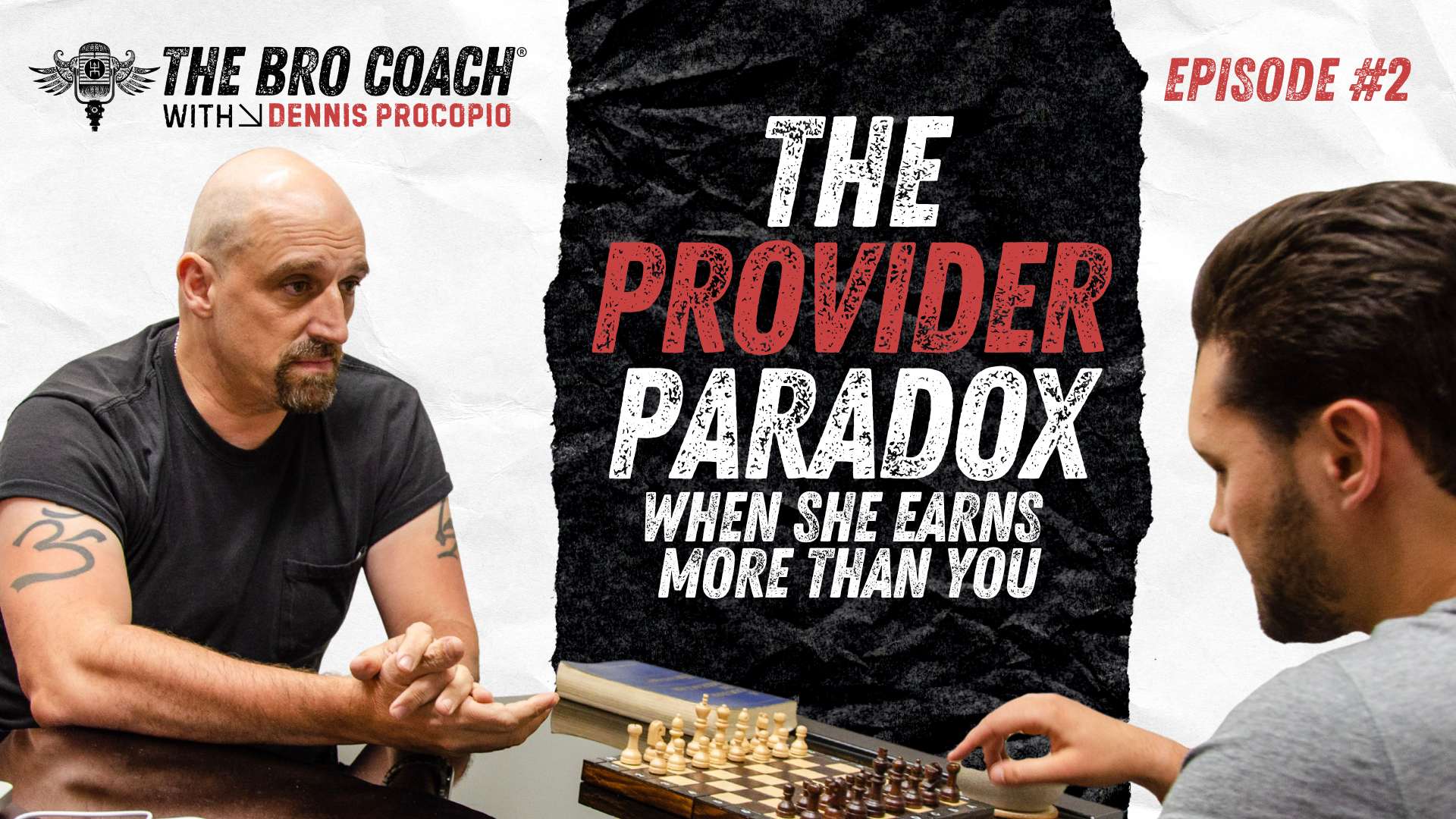
  • The Provider Paradox: When She Earns More Than You
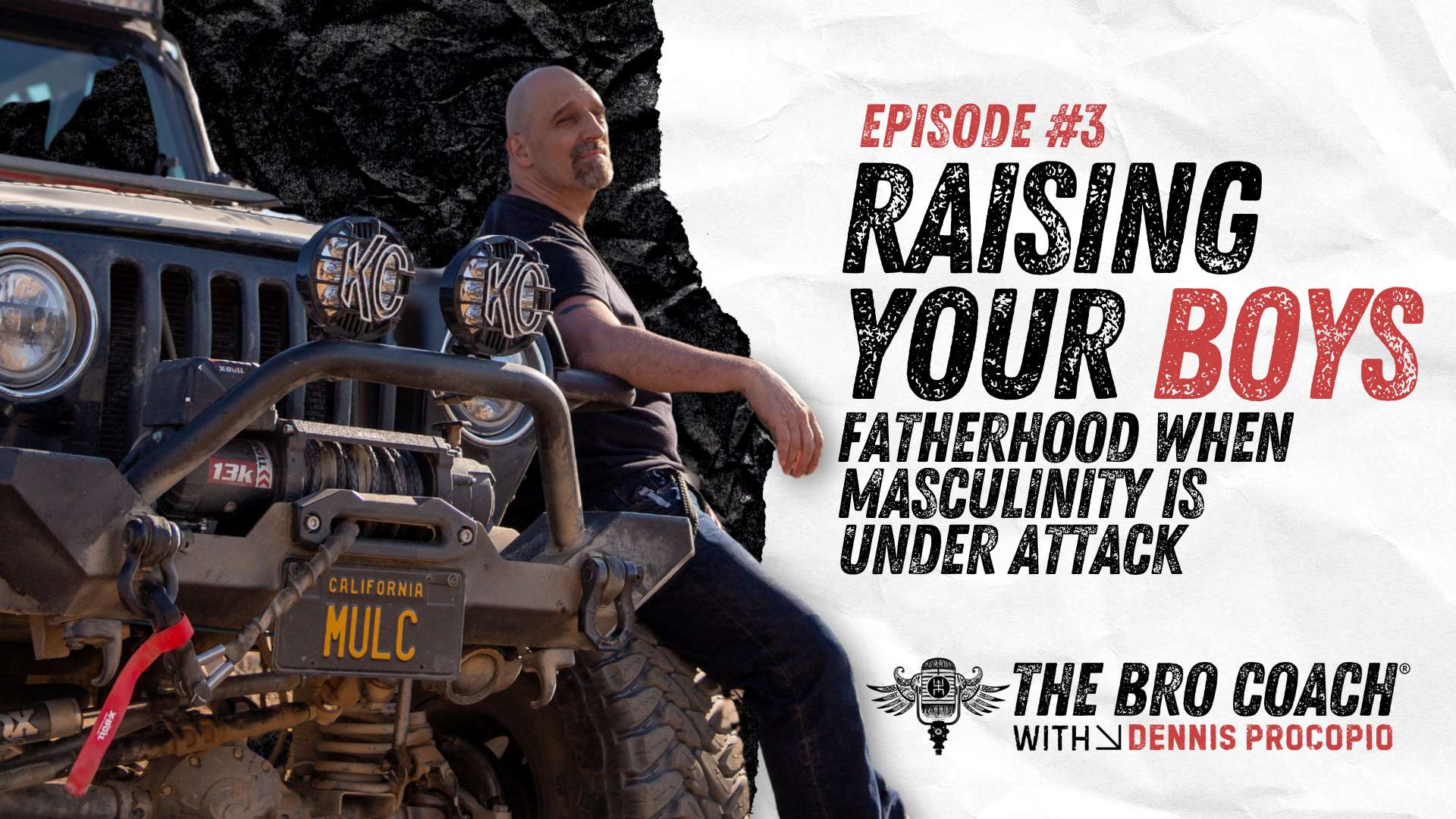
  • Raising Your Boys: Fatherhood When Masculinity is Under Attack

These episodes lay the foundation for the podcast’s mission: to redefine what it means to be a strong, present, purpose-driven man by fusing ancient masculine wisdom with modern performance psychology.

What this means for listeners: Real moves, clear frameworks, and powerful insights ready for immediate application. Whether you’re a high achiever feeling stuck, a father seeking stronger leadership, or simply a man tired of generic advice — this podcast brings the heat.

You’re invited: Join the live YouTube launch party on October 21 at 6:15 PM PDT to meet Dennis Procopio and MC Mark de Grasse, connect with like-minded men, and experience the first wave of evolved masculine insight. Visit brocoach.com/podcast to stream the first three episodes and access the launch link.


About The Bro Coach® Podcast
The Bro Coach® Podcast is hosted by Dennis Procopio, founder of Man-UP! Life Coaching and creator of the Bro Coach® Approach. The show offers unfiltered coaching insight for high-performing men who want more from life — more presence, more purpose, and more truth. Not red-pill. Not therapy. Just real talk for evolved men.

How do you raise strong, confident sons in a world that's confused about masculinity? As fathers, we're navigating uncharted territory. The old "shut up and be a man" playbook is dead, but what replaces it? How do you teach your boys to be empathetic without losing what makes them men? In this episode, Dennis Procopio dives into one of the most critical challenges facing modern fathers: raising boys who are strong, present, and emotionally intelligent in a climate where masculinity itself feels under attack.

Raising Your Boys: Fatherhood When Masculinity is Under Attack | Season 1, Ep. 3


SUMMARY

How do you raise strong, confident sons in a world that’s confused about masculinity? As fathers, we’re navigating uncharted territory. The old “shut up and be a man” playbook is dead, but what replaces it? How do you teach your boys to be empathetic without losing what makes them men?

In this episode, Dennis Procopio dives into one of the most critical challenges facing modern fathers: raising boys who are strong, present, and emotionally intelligent in a climate where masculinity itself feels under attack.

Resources

What happens to your identity as a man when your wife or partner earns more than you do?

The Provider Paradox: When She Earns More Than You | Season 1, Ep. 2


SUMMARY

What happens to your identity as a man when your wife or partner earns more than you do? For generations, men operated from a clear script: be the provider, bring home the bacon, earn respect. But in 2025, that script is outdated.

Women are earning as much or more than men across industries, and many men are struggling to navigate this shift. In this episode, Dennis Procopio tackles the Provider Paradox head-on. This isn’t about ego protection or resentment.

It’s about redefining what it means to show up as a strong, present, purpose-driven man when the traditional provider role no longer applies.

Resources

Sign In

Register

Reset Password

Please enter your username or email address, you will receive a link to create a new password via email.