
Author: Dennis

What results can confidence coaching for guys realistically achieve?

Confidence coaching for guys produces measurable results across multiple life areas, though individual outcomes vary based on commitment and starting point. 

Typical results include improved assertiveness in professional settings, leading to promotions or successful negotiations within 3-6 months. Men report significantly reduced social anxiety, enabling them to network effectively and build meaningful relationships. Dating confidence often improves dramatically, with clients approaching potential partners authentically rather than from fear or bravado. Physical confidence manifests through better posture, stronger eye contact, and more commanding presence. 

Many men experience reduced imposter syndrome, finally internalizing their accomplishments rather than dismissing them. Decision-making improves as confidence reduces overthinking and analysis paralysis. Coaches report clients taking calculated risks they’d previously avoided: starting businesses, public speaking, or pursuing passions. The compound effect is significant—confidence in one area spreads to others. While coaches can’t guarantee specific outcomes, committed clients typically see noticeable improvements within 30 days and transformational changes within 90-180 days.
How does a male empowerment coach help overcome limiting beliefs?

A male empowerment coach helps men identify and dismantle limiting beliefs through a combination of awareness building, evidence examination, and behavioral challenges. Coaches first help men recognize unconscious beliefs that drive self-sabotaging behaviors—beliefs often rooted in childhood experiences, cultural messages, or past failures. 

Common limiting beliefs include “I’m not good enough,” “showing emotion is weakness,” or “success requires sacrificing everything else.” Once identified, coaches guide men through examining evidence for and against these beliefs, often revealing their irrationality. The real work happens through action: coaches design specific challenges that provide contradictory evidence to limiting beliefs. For example, a man believing he’s not leadership material might take on small leadership roles, building evidence of capability. 

Coaches also address the secondary gains limiting beliefs provide, like avoiding risk or responsibility. Through consistent challenge and support, men develop new, empowering beliefs based on actual experience rather than fear. The process requires courage but produces lasting transformation.

What can men expect from relationship coaching for men sessions?

Relationship coaching for men provides practical tools and strategies for improving romantic partnerships, communication skills, and emotional connection abilities. Sessions typically begin with assessment of current relationship dynamics, identifying patterns and pain points. 

Coaches help men understand their attachment styles, communication preferences, and relationship histories’ impact on current dynamics. Practical skills covered include active listening without immediately problem-solving, expressing emotions constructively, setting healthy boundaries, and managing conflict effectively. Coaches address common male relationship challenges: fear of vulnerability, difficulty with emotional expression, balancing independence with partnership, and navigating modern relationship expectations. Sessions often include role-playing difficult conversations, homework assignments for real-world practice, and accountability for implementing changes. 

Men learn to recognize their partner’s needs while maintaining authentic masculine energy. Coaches also help single men prepare for healthy relationships by addressing past wounds and developing relationship-ready mindsets. The focus remains action-oriented, with measurable improvements in relationship satisfaction and communication effectiveness.

Is executive coaching for men worth the investment for career advancement?

Executive coaching for men provides substantial return on investment through accelerated career advancement, improved leadership effectiveness, and better decision-making capabilities. Studies show that executive coaching typically returns $5-7 for every dollar invested through improved performance and productivity. 

For men in leadership positions, coaching addresses critical gaps that technical skills alone can’t fill: emotional intelligence, strategic thinking, stakeholder management, and authentic leadership presence. Coaches help executives navigate organizational politics, manage high-performing teams, and balance aggressive goal achievement with sustainable practices. They provide confidential sounding boards for decisions that executives can’t discuss with colleagues or family. 

Executive coaching also addresses the isolation many male leaders experience, providing support while maintaining professional boundaries. The investment often pays for itself through a single promoted position, successful negotiation, or avoided costly mistakes. Beyond financial returns, executives report improved job satisfaction, better work-life integration, and reduced stress. For men serious about reaching senior leadership positions, executive coaching isn’t an expense—it’s a strategic career investment.

What’s the difference between a masculinity coach and a regular life coach?

A masculinity coach specifically addresses the unique challenges men face regarding identity, social expectations, and authentic masculine expression in modern society. 

While regular life coaches work with general life goals and challenges, masculinity coaches understand the specific pressures men experience: conflicting messages about what it means to be a man, struggles with emotional expression, navigating relationships while maintaining masculine identity, and dealing with shame around vulnerability. Masculinity coaches help men develop healthy masculine traits like strength, leadership, and protectiveness while also cultivating emotional intelligence and connection ability. 

They understand that men often process emotions and challenges differently, preferring action-oriented approaches over extensive emotional processing. These coaches address topics like male friendship, fatherhood, competitive drive, and purpose-driven living through a specifically masculine lens. They help men reject both toxic masculinity and overly softened approaches, finding an authentic middle ground that honors masculine energy while promoting growth and connection.

How can men’s personal growth coaching improve work-life balance?

Men’s personal growth coaching addresses work-life balance by helping men reframe the concept entirely. Rather than viewing work and life as competing forces requiring perfect balance, coaches help men develop integrated approaches where different life areas support each other. 

Coaching helps identify core values and non-negotiables, ensuring critical life elements aren’t sacrificed for career success. Men learn to set boundaries effectively, communicate needs clearly, and manage energy rather than just time. Coaches help address the guilt many men feel when not working, recognizing this as cultural conditioning rather than truth. 

Through coaching, men develop systems for being fully present in each life domain, improving both productivity and satisfaction. They learn to recognize burnout signs early and implement preventive strategies. Coaches also address the identity issues many men face when their self-worth is tied exclusively to work performance. The result is often increased effectiveness at work due to better overall life satisfaction and energy management.

What qualities should I look for in a male confidence coach?

A quality male confidence coach should possess both professional and personal experience overcoming confidence challenges. Look for coaches who demonstrate authentic confidence without arrogance, speaking from a place of genuine understanding rather than theory alone. Strong coaches have clear methodologies and can articulate their approach to building confidence, whether through behavioral challenges, mindset work, or practical skill development. 

They should understand male psychology and the unique confidence challenges men face in modern society. Experience working with men similar to your demographic and challenges is valuable. Effective confidence coaches balance support with challenge, pushing clients outside comfort zones while providing safety nets. They should offer concrete tools and exercises, not just motivational speaking. Look for testimonials from men who’ve achieved tangible results. The coach should model healthy masculinity and confidence without promoting toxic behaviors. Most importantly, you should feel a genuine connection and trust during initial conversations.

How much does life coaching for men typically cost?

Life coaching for men typically ranges from $100 to $500 per individual session, with most coaches falling in the $150-300 range. Package deals often provide better value, with three-month programs ranging from $2,000 to $10,000 depending on the coach’s experience, credentials, and program intensity. 

Some coaches offer group coaching options at lower rates, typically $50-150 per session. High-end executive coaches may charge $500-1,000+ per session. The investment varies based on factors including the coach’s expertise, location (with urban areas typically commanding higher rates), session length (usually 45-90 minutes), and whether sessions are in-person or virtual. 

Many coaches offer free consultation calls to assess fit. While the cost may seem significant, clients often view it as an investment in their personal and professional development, with many reporting substantial returns through career advancement, improved relationships, and better decision-making. Some coaches offer sliding scales or payment plans to increase accessibility.

What does a men’s life coach do to help clients achieve their goals?

A men’s life coach serves as a strategic partner who helps men identify obstacles, create actionable plans, and maintain accountability toward their goals. Unlike traditional therapy, which often focuses on processing past experiences and emotions, men’s life coaching is forward-focused and action-oriented. 

Coaches work with clients to develop clear objectives, break them into manageable steps, and provide structure and support throughout the journey. They help men navigate challenges in various life areas including career advancement, relationship dynamics, personal health, and self-confidence. 

The coaching process typically involves regular sessions where progress is reviewed, obstacles are addressed, and new strategies are developed. Men’s life coaches also provide a unique perspective that understands masculine psychology and communication styles, creating a space where men feel comfortable being direct and solution-focused.

The approach emphasizes practical tools, measurable outcomes, and sustainable behavioral change rather than endless analysis.

Why successful men lose real friendships and how to rebuild authentic brotherhood without awkwardness or neediness. Practical steps for connection and self-trust.

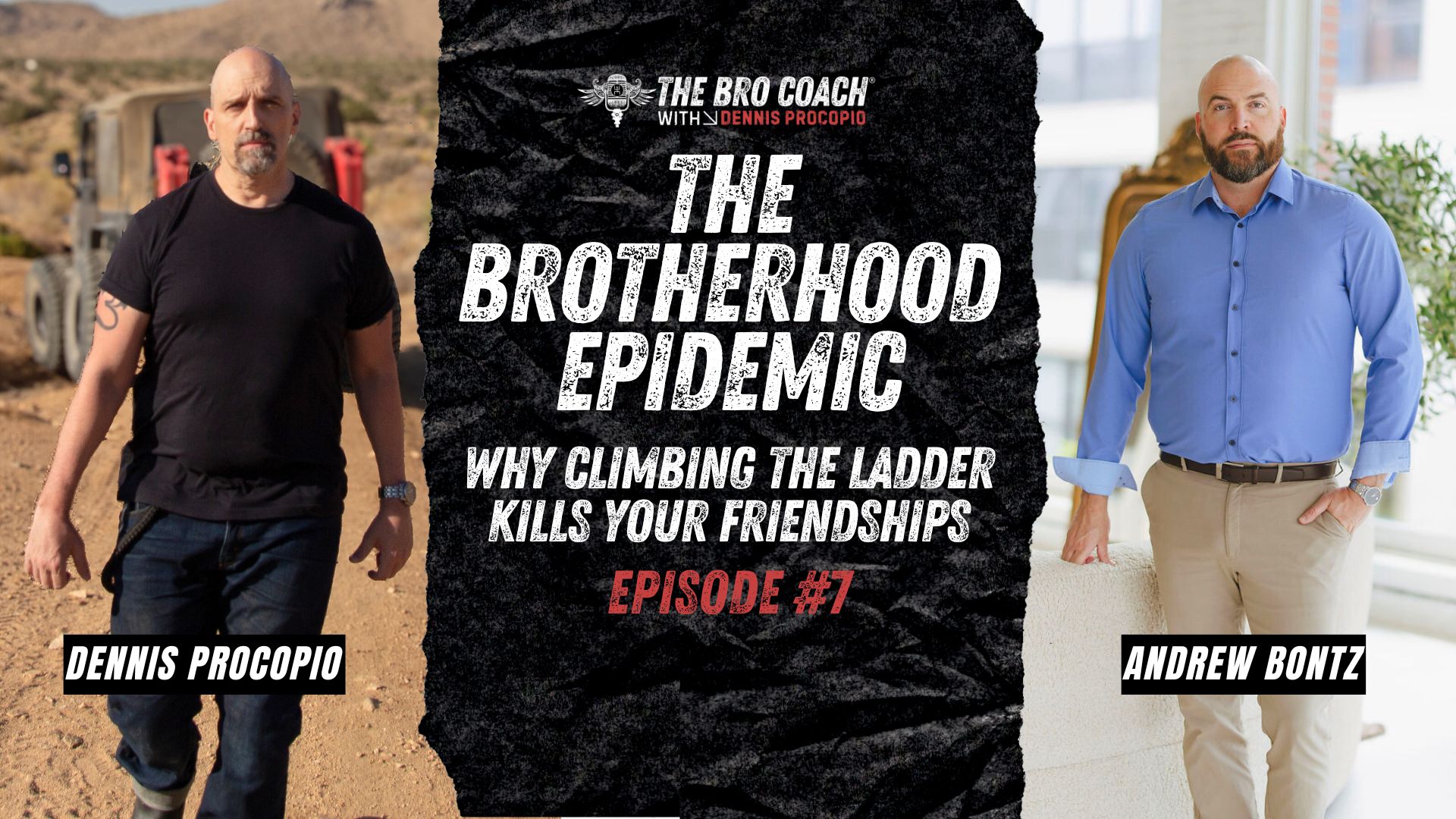
The Brotherhood Epidemic: Why Climbing the Ladder Kills Your Friendships | Season 1, Ep. 7


SUMMARY

You’ve got the career, the money, the family. So why don’t you have a single guy you can actually call when life gets heavy?

Most high-achieving men have work friends they can’t be real with, rusty college buddies they talk to once a year, and their wife’s friends. But no actual bros. No real brotherhood. And admitting you want male friends feels weird as hell—like you’re somehow failing at being a man.

In this episode, Dennis Procopio (The Bro Coach®) and Andrew Bontz tackle the uncomfortable truth about male friendship: the higher you climb, the fewer real friends you have. Most guys have no idea how to fix it without feeling like they’re “trying to pull some dudes.”

Key Topics

  • Why high-achieving men consistently struggle with real male friendships
  • The trap of making your wife your therapist and best friend (and why it backfires)
  • Dennis’s brutal truth: “A friend in need is a pest”—and what it means for building brotherhood
  • How to be your own best friend before you try to build friendships
  • Self-validation practices to overwrite negative self-talk
  • The 11-piece affirmation Dennis uses when life gets dark
  • Practical steps: hobbies, activities, and how to meet guys without being weird about it
  • Why you need to beat loneliness first before you can build real brotherhood

Resources

Sign In

Register

Reset Password

Please enter your username or email address, you will receive a link to create a new password via email.