Author: Dennis

The Provider Dad

Definition: The Provider Dad is a father archetype Dennis Procopio (The Bro Coach®) uses to describe the man who gives his family every material advantage, financial security, a good home, education, opportunity, while remaining emotionally or physically absent from their daily lives. He is not a bad man. He is often an exceptional man by most conventional measures. But his version of fatherhood is expressed almost entirely through provision rather than presence.

The Invisible Cost: The Provider Dad’s sons often grow up in a paradox. They are grateful for everything their father built and quietly grieving the version of him they never got. They internalize the message, usually unconsciously, that love is expressed through sacrifice rather than presence. Many of them go on to replicate the same pattern in their own families.

The Treadmill: The Provider Dad is not absent because he does not care. He is absent because he is on a treadmill of responsibility that never stops. He is simultaneously piloting a plane and expected to enjoy being a passenger. The pressure to provide creates the very absence that his family experiences as abandonment.

Coaching Application: Men who grew up with a Provider Dad often need to untangle gratitude from longing, and provision from love. They also often need to recognize where they are replicating the pattern with their own families. The Bro Coach® helps these men integrate the drive to provide with the capacity to be present, so the next generation does not inherit the same wound.

Featured in The Bro Coach® Podcast, Season 2, Episode 9: Who’s Your Daddy? Father’s Day Special 2026.

Competency Addiction: Why High-Achieving Men Tie Their Worth to Winning

You hit the goal. You closed the deal. You finished the race. And for about 90 seconds, you felt it. Then it was gone, and you were already looking for the next thing to prove.

If that pattern sounds familiar, you may be dealing with competency addiction, one of the most common and least-talked-about dynamics Dennis Procopio (The Bro Coach®) sees in high-achieving men. It is not laziness. It is not ambition. It is a psychological loop that keeps men grinding not because they love the work, but because stopping feels like losing themselves.

What Is Competency Addiction?

Competency addiction is the pattern where a man’s sense of self-worth is entirely dependent on external achievement. Winning feels like proof of value. Losing, or even pausing, feels like exposure. Like if you are not performing at a high level, the whole story you tell about yourself falls apart.

This is different from healthy ambition. A man with healthy ambition pursues goals because they matter to him. A man with competency addiction pursues goals because he is afraid of what he is without them. The drive looks the same from the outside. The internal experience is completely different.

Where It Comes From

In most cases, competency addiction starts with conditional validation in childhood. If your father, coach, teacher, or community only showed approval when you performed, your brain learned a simple equation: achievement equals worth. Not performing equals worthlessness.

This is especially common in high-pressure family environments where grades, trophies, and outcomes were praised but the kid underneath them was not. Dennis works with men across cultures and backgrounds who carry this pattern. Some grew up in households where a 98 on a test was met with “what happened to the other two points?” Some grew up in households where dad was never there to see them perform at all, so they spent their life performing for an invisible audience hoping he would eventually show up and take notice.

Either way, the result is the same. A grown man who does not know how to rest, receive, or feel worthy outside of output.

How Competency Addiction Shows Up in Adult Men

  • An inability to celebrate wins before moving to the next goal
  • Deep discomfort with vacation, rest, or unstructured time
  • Measuring personal value against other men’s income, status, or achievements
  • A persistent feeling that you are never enough no matter how much you accomplish
  • Using work or fitness achievements to manage anxiety rather than to create meaning

Breaking the Loop

The first step is recognizing that the loop exists. Most men with competency addiction have never named it. They just know they cannot sit still, they do not feel good enough, and they are exhausted in a way that more wins never seem to fix.

The work, whether through coaching, honest self-reflection, or both, is to separate performance from worth. Your value as a man is not a scoreboard. It does not go up when you win and down when you lose. Building unconditional self-worth, the kind that does not need external proof to exist, is one of the core outcomes of serious men’s coaching.

If you recognize this pattern in yourself, it is worth exploring where it started and what it is costing you. Not just in productivity, but in relationships, presence, and peace.

Schedule a complimentary 30-minute coaching call to start that conversation.

How to Be a More Present Father: What High-Performing Dads Get Wrong

You provide. You protect. You perform. And by most measures, you are doing everything right. But your kids barely see you, and when you are home, you are not really there.

This is the presence gap, and it is one of the most common issues Dennis Procopio (The Bro Coach®) coaches high-performing fathers through. The men who come to him are not bad dads. They are often exceptional providers. But providing is not the same as being present, and their families are starting to feel the difference.

Why High-Performing Dads Struggle with Presence

The same qualities that make a man successful at work, focus, forward momentum, strategic thinking, a bias for action, are the exact qualities that make being present with your kids feel uncomfortable. Presence requires you to slow down, feel something, and offer your attention without an agenda. For men wired to produce, that is genuinely hard.

There is also a logic trap many provider dads fall into: “I am doing this for them.” The long hours, the missed dinners, the phone at the table, all of it is framed as sacrifice for the family. But children do not experience your absence as sacrifice. They experience it as absence. That gap, between what you intend and what they receive, is where the disconnect builds.

What Presence Actually Looks Like

Presence is not about quantity of time. It is about quality of attention. A father who is physically home but mentally in his inbox is not present. A father who takes 20 minutes and is completely there, phone face-down, eyes up, body relaxed, asking real questions and actually listening to the answers, is present in a way that matters.

Dennis breaks it down into three specific practices for fathers:

  • Respect: Treat your wife and children according to their value system, not yours. Kindness and humor go further than you think.
  • Empathy: Let yourself feel what they feel, even when it is uncomfortable. Especially when it is uncomfortable.
  • Presence: Get undistracted and be here now. Listen to your kid’s voice. Watch the way they move. Notice what is changing. It changes faster than you think.

The Standard That Actually Matters

Dennis is direct about this: a father who is trying is a good dad. Not a perfect dad. Not the dad who never misses a game or always says the right thing. A dad who is showing up, paying attention, and doing the work to be better is already doing something most men in history never had a model for.

The Three P’s (Provide, Protect, Perform) will always be part of the male identity. But the fourth P, presence, is what your kids will remember. Not your income. Not your title. Whether you were actually there when it counted.

If this resonates and you want to work on showing up differently at home, start with a complimentary coaching conversation.

The Father Wound: How Your Dad’s Parenting Style Is Still Affecting You as a Man

Most men do not walk around thinking about their relationship with their father. They are too busy building their careers, managing their households, and handling everything that needs handling. But underneath the grind, the father wound is often quietly running the show.

The father wound is not a clinical diagnosis. It is a term used to describe the lasting psychological impact of a father’s absence, neglect, abuse, or emotional unavailability on his son’s sense of identity and self-worth. Dennis Procopio (The Bro Coach®) encounters this pattern constantly across his client roster, from first-generation entrepreneurs to executives to men in their 60s who are still, in some corner of themselves, waiting for their father’s approval.

Two Types of Father Wounds

Not every father wound looks like obvious trauma. There are two primary patterns Dennis coaches men through:

The absent provider: This father gave you every material advantage but was emotionally or physically unavailable. He worked himself into the ground to build a good life for you, and in doing so, was rarely present for it. His sons often grow up with deep gratitude and deep longing at the same time, and many go on to replicate the same pattern in their own families.

The absent or abusive father: This father was simply not equipped to be a parent, whether due to addiction, violence, mental illness, or immaturity. His sons often grow up without a model for what healthy masculine strength looks like, and they either overcorrect (becoming rigidly controlled) or undercorrect (becoming emotionally avoidant).

How the Father Wound Shows Up in Adult Men

  • Seeking approval from authority figures, partners, or peers in ways that feel compulsive
  • Difficulty accepting praise or believing you deserve success
  • An outsized reaction to criticism, especially from men you respect
  • A persistent sense that you are a fraud, even when your results say otherwise
  • Emotional unavailability with your own children, not from lack of love, but from lack of a model

What Healing Actually Looks Like

Healing the father wound does not mean forgiving your father, though that can happen. It does not require a confrontation or a conversation that may never come. What it requires is separating your worth from his behavior, recognizing that what he gave you or failed to give you was about him, not a verdict on you.

Dennis calls this fathering your inner child. It is the daily practice of giving yourself the unconditional validation, the presence, the steady voice that says “you are enough regardless of what you produce.” It is not therapy-speak. It is what happens when a man stops waiting for external approval and starts building something internal instead.

This is foundational work. And it is exactly the kind of work that men’s coaching is built for. If you are ready to examine what your father’s influence is still costing you, a complimentary coaching call is a good place to start.

The Bro Coach® breaks down how your father's parenting shaped your self-worth. A raw Father's Day coaching session for men ready to do the work.

Who’s Your Daddy? | Father’s Day Special 2026 | Season 2, Episode 9


SUMMARY

Every man carries his father with him. In the good ways. And in the hard ones.

In this Father’s Day solo coaching session, Dennis Procopio (The Bro Coach®) goes somewhere most podcast hosts avoid: the direct line between your father’s behavior and your self-worth as an adult man. Whether your dad showed up with everything except his presence, or was absent, abusive, or simply not equipped for the job, this episode names what that experience is still costing you today.

Dennis opens by breaking down two distinct father archetypes. First: the provider dad who worked himself to the bone to give his family every material advantage, but who was so deep in the grind that he had nothing left when he got home. These are the men whose sons grow up in comfort but learn, quietly, that love is earned through performance. Second: the father who simply was not there, whether through absence, addiction, or abuse. Dennis speaks from personal experience here, sharing his own history with a violent, volatile father and how that shaped the man and coach he became.

The episode names the real epidemic Dennis sees in high-performing men: competency addiction. The pattern where winning is the only way to feel valuable, because no one ever told you your worth was unconditional. He draws the line from the dad who demanded a 100 and asked why you missed two points, to the adult man who cannot stop grinding long enough to feel anything.

For the fathers in the audience, Dennis delivers a direct and honest message. The Three P’s (Provide, Protect, Perform) still matter. But the fourth element most men miss is presence. Phone down. Eye contact. Armor off. He breaks down three specific practices to run: Respect, Empathy, and Presence, and explains why a father who is trying is already a good dad.

Dennis closes with something he calls fathering your inner child, the daily work of giving yourself what your father could not. After more than 25,000 hours coaching men of every background, he has become an ad hoc father figure for hundreds of them, including men decades older than himself. This episode is part coaching session, part love letter, and part honest accounting of what fatherhood really demands.

Key Topics

  • How your father’s parenting style is still shaping your self-worth as an adult man
  • Why high achievers develop competency addiction when unconditional love was never modeled at home
  • The Three P’s every man lives by and the presence element most dads miss
  • What fathering your own inner child means and why it matters for growth
  • Three practices every father needs to run: Respect, Empathy, and Presence

Resources

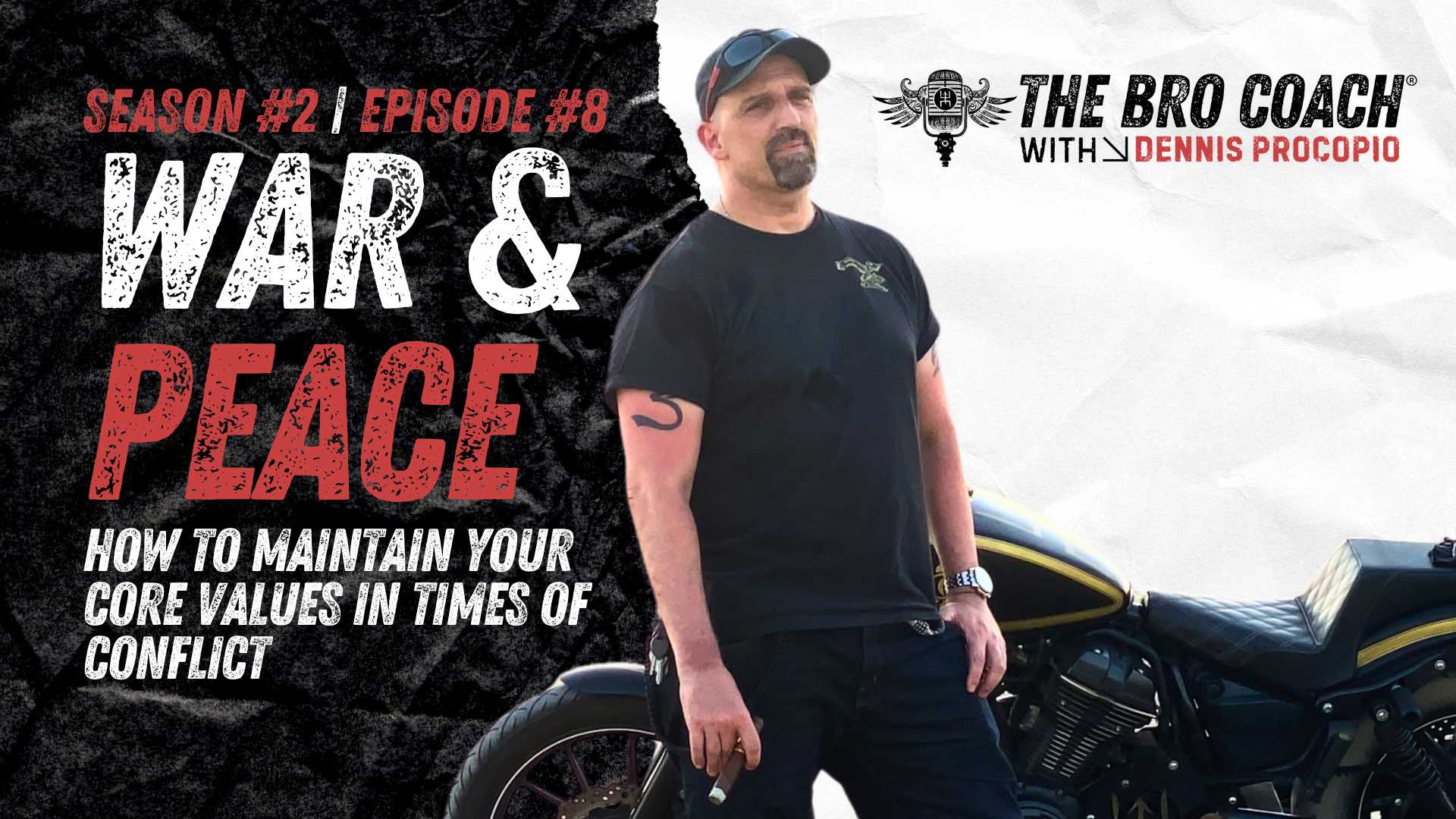
War & Peace: How to Maintain Your Core Values in Times of Conflict | Season 2, Episode 8

War & Peace: How to Maintain Your Core Values in Times of Conflict | Season 2, Episode 8


SUMMARY

Most men know what they stand for. Until the world gives them a reason to question it.

This episode is not a political statement. It’s a coaching moment.

In this solo episode, Dennis Procopio (The Bro Coach®) takes on the topic he almost refused to touch: war, conflict, and what it really means to hold your values when the noise gets loud. No co-host. No safety net. Just Dennis being straight about why a man with his background, Jewish and Italian roots, a coaching roster spanning every faith and ideology, and a lifetime of hard-earned experience, finally decided to say what he actually thinks.

The episode opens with honesty: Dennis wanted to stay in his lane. He almost talked himself out of it. But that inner voice telling him to shut up and play it safe? That’s exactly what this episode is about. Because every man faces moments when the easier move is to say nothing, take a side he doesn’t believe in, or let the media choose his values for him.

Dennis breaks down the difference between conflict and hatred, and why one is a fact of life while the other is a defeat. He’s direct about what it takes to maintain your core values when the world turns up the heat: you need to know what you believe before the pressure hits, and you need to be willing to love your brother even when everything around you says not to.

If you feel hate in your heart, you’ve already lost the war. That’s the message. Real men choose love over hate, not because they’re soft, but because they’re strong enough to know the difference.

Key Topics

  • Why Dennis almost didn’t touch the topic of war, conflict, and world affairs
  • How media and political narratives try to hijack your values and what to do about it
  • The difference between conflict and hatred, and why one is strength and the other is defeat
  • How Dennis coaches men across every faith, race, and ideology without losing his own compass
  • Why real men choose love over hate, even in the hardest moments

Resources

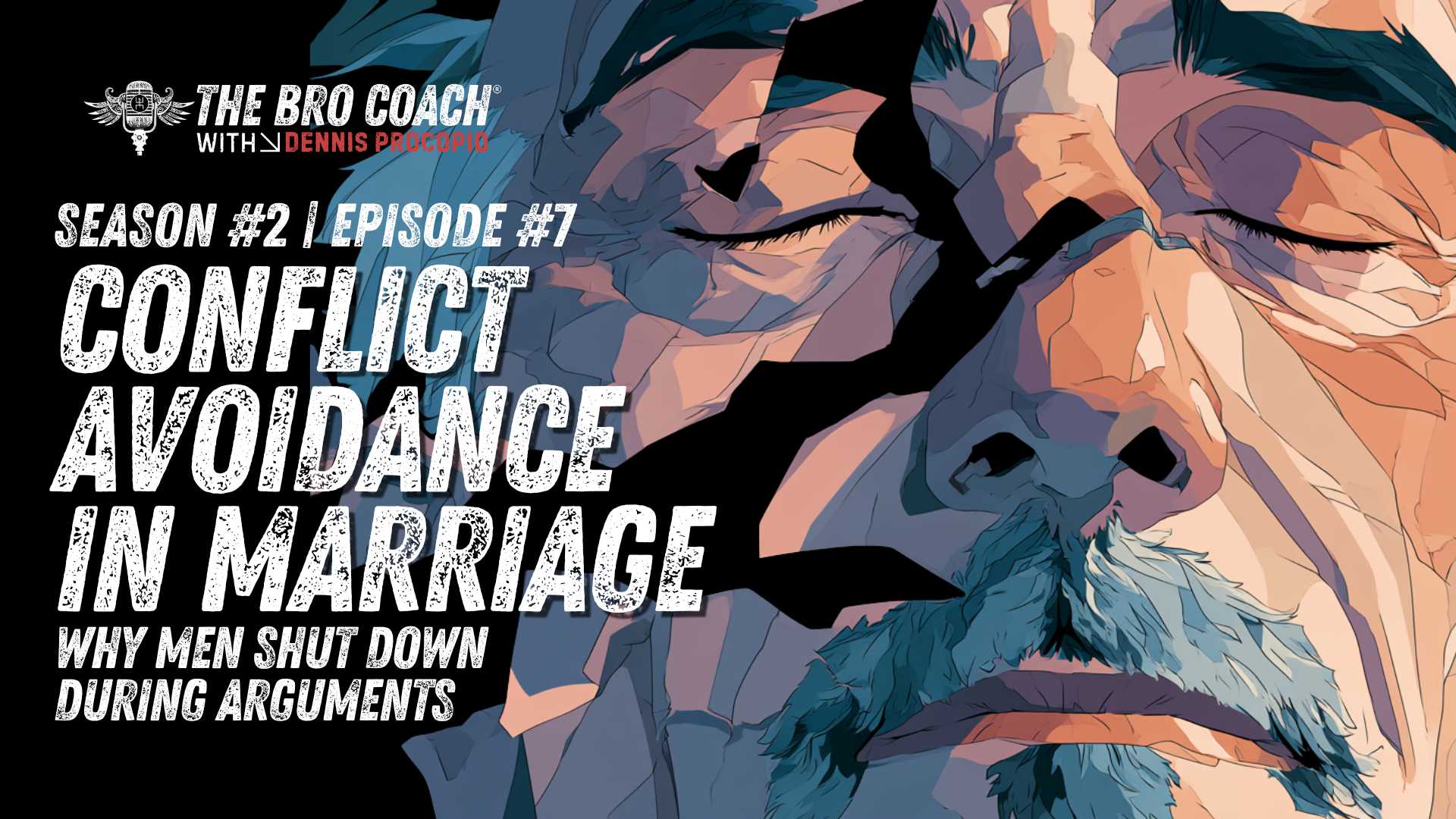
Conflict Avoidance in Marriage: Why Men Shut Down During Arguments | Season 2, Episode 7


SUMMARY

Most men know they shut down during arguments with their wives. What they don’t know is why, and that lack of understanding is costing them the connection, respect, and peace they need most in a marriage.

None of that changes by staying quiet.

In this solo episode of the Bro Coach® Podcast, Dennis Procopio (The Bro Coach®) goes deep on one of the most common patterns he sees in men’s coaching: conflict avoidance in marriage. He breaks down the real reasons husbands go silent, physically leave the room, or emotionally check out the moment their wives want to talk, and why none of those responses is actually solving the problem.

Dennis unpacks the male nervous system response to conflict, explaining that men don’t retreat out of laziness or lack of love. They retreat because they are wired to regulate through action and silence, not conversation. While women process emotion by talking, men process by withdrawing. The problem isn’t the difference. It’s the communication gap that grows when neither partner understands why the other one works the way they do.

He also addresses the three things men want most in a relationship: loyalty, validation, and peace, and how a conflict-heavy dynamic threatens all three at once. But Dennis doesn’t stop there. He pushes men to go further by introducing the REP framework: Respect, Empathy, and Presence. These are the three qualities women need from their partners today, and they are learnable, even for men who’ve spent a lifetime compartmentalizing their emotions.

Dennis draws a sharp contrast between cognitive empathy (feeling sorry for someone) and true empathy (actually feeling what they feel), and challenges men to develop the emotional muscle that most were never taught to use. He also delivers practical tactics: ask your wife proactively if she needs to talk, stop defending when she brings up feelings, and learn to ask for space the right way so both partners feel respected, not abandoned.

This episode is direct, raw, and built for men who want better marriages but keep hitting the same wall. If you’ve ever stared at your wife mid-conversation with nothing to say, or walked out of the room to avoid a fight, this one is for you.

Key Topics

  • Why men go emotionally silent during arguments and what’s actually happening in the nervous system
  • The difference between cognitive empathy and true empathy, and why it matters in marriage
  • How to stop avoiding conflict and start initiating productive conversations with your wife
  • Why women push harder during arguments and what they actually need from you
  • The REP framework: Respect, Empathy, and Presence for married men today

Resources

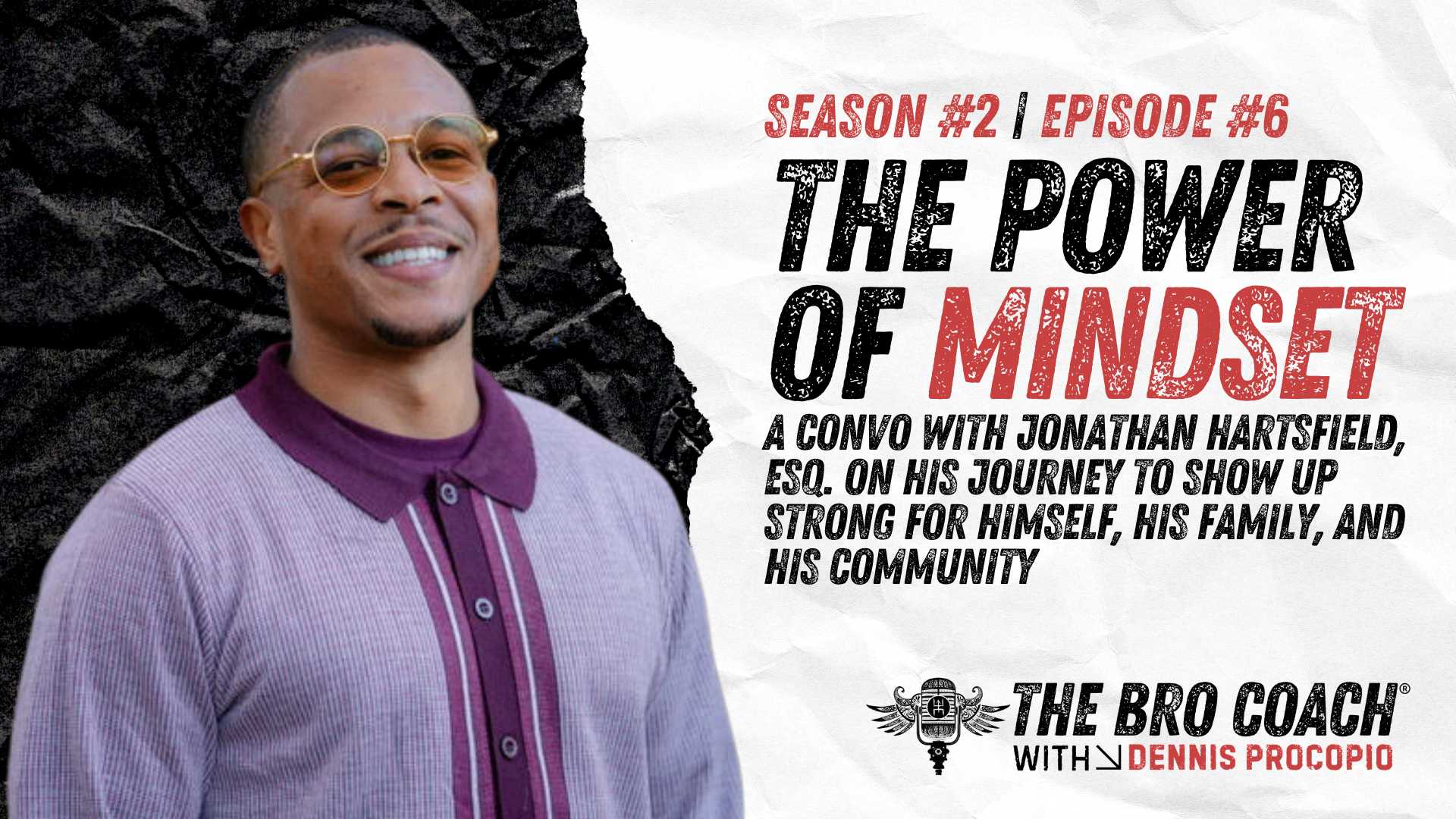
Bro Coach® Dennis Procopio and attorney Jonathan Hartsfield on mindset, marriage, fatherhood, and showing up strong for yourself and your community.

The Power of Mindset: A Convo with Jonathan Hartsfield, Esq. on His Journey to Show Up Strong for Himself, His Family, and His Community | Season 2, Episode 6


SUMMARY

Jonathan Hartsfield grew up in Detroit in a blue-collar household with a secret weapon: a legal dynasty in his family. Aunts, cousins, and in-laws practicing law across New York, Houston, and Michigan. He watched it. He absorbed it. And he decided it was attainable.

That mindset carried him from Detroit’s streets, which he navigated by staying busy through chess, golf, swimming, and constant motion, through law school and into Charlotte, NC, where he now practices housing law at a nonprofit firm defending people against eviction and landlord exploitation. He is, as Bro Coach® Dennis Procopio puts it, the Robin Hood of Mecklenburg County.

This conversation goes deep on what it really takes to build a life you’re proud of, not just a career. Jonathan and Dennis cover the Du Bois vs. Booker T. Washington debate on professional attainment vs. vocational paths, and why society needs both. They dig into the drive vs. drift coaching framework, the pyramid principle of sustainable success, and why high-achieving men who are always going up need to also be building out.

They also go deep on marriage. Jonathan loves being married. He says it plainly and means it. He talks about studying his wife, building a relationship with Olympic-torch commitment, and why genuine partnership requires character and integrity, not just effort. And fatherhood: his kids are anchors, not obligations.

Jonathan’s advice for any man trying to level up: read, study, and learn yourself. The more you can sit with who you are, the more you can build something real. And if you can’t do it alone, Dennis knows a guy.

TIMESTAMPS

  • 0:00 – Intro: The Blueprint for Men Who Want More
  • 0:23 – Dennis Introduces Jonathan Hartsfield
  • 1:22 – Why Jonathan Became a Lawyer
  • 3:12 – The Legal Dynasty in His Family
  • 5:00 – How Modeling Success Makes Achievement Feel Attainable
  • 10:11 – Jonathan’s Upbringing in Detroit
  • 14:23 – Staying Off the Streets: The Power of Staying Busy
  • 18:29 – Jonathan’s Work: Housing Law in Charlotte
  • 20:04 – Fighting for the Little Guy: Consumer Protection
  • 23:00 – Du Bois vs. Booker T.: Two Paths to Ascension
  • 24:42 – Jonathan’s Drive and Self-Identity
  • 28:45 – Man-UP! Life Coaching Ad Break
  • 31:44 – Coaching, Spiritual Development, and the Drive vs. Drift Balance
  • 38:31 – Do You Enjoy Being Married?
  • 39:56 – What Makes a Great Marriage
  • 42:13 – Partnership vs. Simping: The Difference
  • 49:59 – Being a Father: Anchors for Every Decision
  • 57:36 – Jonathan’s Advice: Read, Study, Know Yourself
  • 58:16 – Closing

WHAT YOU’LL LEARN

  • How a legal dynasty in Jonathan’s family made success feel attainable, not aspirational
  • The Du Bois vs. Booker T. Washington debate: two paths to professional ascension and why society needs both
  • The drive vs. drift framework: what separates men who build with intention from men who just stay busy
  • The pyramid principle of sustainable success: why high-achieving men need to build out, not just up
  • What it actually looks like to love being married: Olympic-torch commitment, studying your partner, and showing up with character
  • How fatherhood anchors your decisions instead of limiting them
  • Why self-knowledge is the foundation of every real level-up
  • How Dennis’s coaching framework bridges spiritual development and real-world results

THIS HITS IF YOU’RE

  • A high achiever who’s mastered the career but keeps feeling like something’s still missing
  • Drifting through life on autopilot and ready to trade that for a framework that actually works
  • A man who wants to show up better in his marriage, not just survive it
  • A father trying to be an anchor for his kids instead of just a provider
  • Someone who grew up without a blueprint and is now building one from scratch
  • Ready to do the internal work, not just the external hustle

Resources

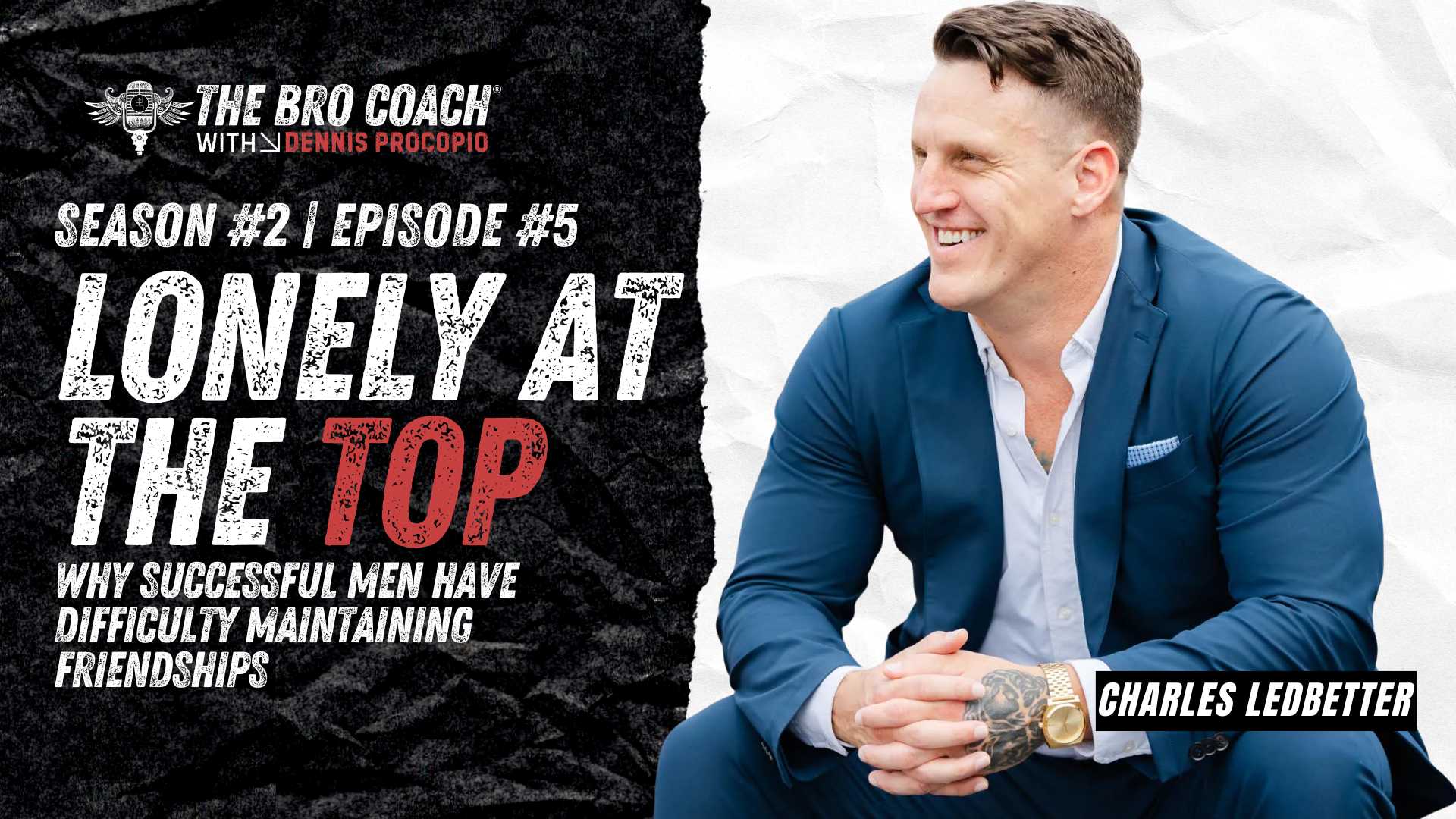
Bro Coach® Dennis Procopio and Charles Ledbetter on the male loneliness epidemic, why success amplifies isolation, and the linear drive vs. lateral being framework for men who keep building but feel empty.

Lonely at the Top: Why Successful Men Have Difficulty Maintaining Friendships | Season 2, Episode 5


SUMMARY

You’ve got the career, the income, and the respect. And somehow you’re the loneliest guy in the room.

Nobody warns you about this part. The bigger your life gets, the smaller your real circle gets. What used to be loneliness at the bottom doesn’t disappear when you hit the top. It just changes what it looks like.

Bro Coach® Dennis Procopio and co-host Charles Ledbetter dig into why high-achieving men quietly lose real friendships as they gain success, and what it actually takes to build the kind of male connection that can hold the weight of the life you’re building.

Charles came into Man-UP! Life Coaching isolated and burned out. He rebuilt everything: businesses, a marriage, a family. He now manages 182 properties. Then he realized the loneliness had a way of cycling back in. A five-week-old baby, multiple businesses, a full calendar, and almost no time for the friends who used to be constants. Success doesn’t solve it. It just repackages it.

This episode covers the male loneliness epidemic at the top, why men are wired to be human doings instead of human beings, why validation from your wife or your mom can’t touch what real brotherhood does for you, and Dennis’s linear drive vs. lateral being framework for men who keep building upward without building outward. Also: Robin Williams, capuchin monkeys, a $2 million a year guy who hates his house, and why skipping relationships is just like skipping leg day.

TIMESTAMPS

  • 0:00 – Why Successful Men Have No Real Friends
  • 1:33 – Charles’s Before and After: From Isolated to Rebuilt
  • 10:34 – Dennis on the Beach: “Are You Successful?”
  • 14:23 – Male Empathy and Emotional Conditioning
  • 19:27 – Protect, Provide, Perform: The Three P’s of Male Identity
  • 20:48 – Human Doing vs. Human Being
  • 21:01 – The Male Loneliness Epidemic at the Top
  • 22:44 – Robin Williams and the Cost of Success Without Connection
  • 24:12 – Connection Is Biological: The Capuchin Monkey Study
  • 25:42 – Why Validation From Men Hits Differently
  • 50:38 – Linear Drive vs. Lateral Being: Dennis’s Framework for Sustainable Success

WHAT YOU’LL LEARN

  • Why success amplifies loneliness instead of curing it
  • The difference between extrinsic self-esteem and intrinsic self-worth
  • Why male validation hits differently than anything your partner can offer
  • How to maintain real male friendships when your schedule is full
  • The three P’s of male identity: protect, provide, perform, and why they trap you
  • The linear drive vs. lateral being framework for sustainable success

THIS HITS IF YOU’RE

  • Winning on paper but feeling like something’s missing
  • Successful enough that you’ve outgrown most of your old friends
  • The guy everyone else thinks has it all figured out
  • Wondering why more success isn’t making the loneliness quieter

Resources

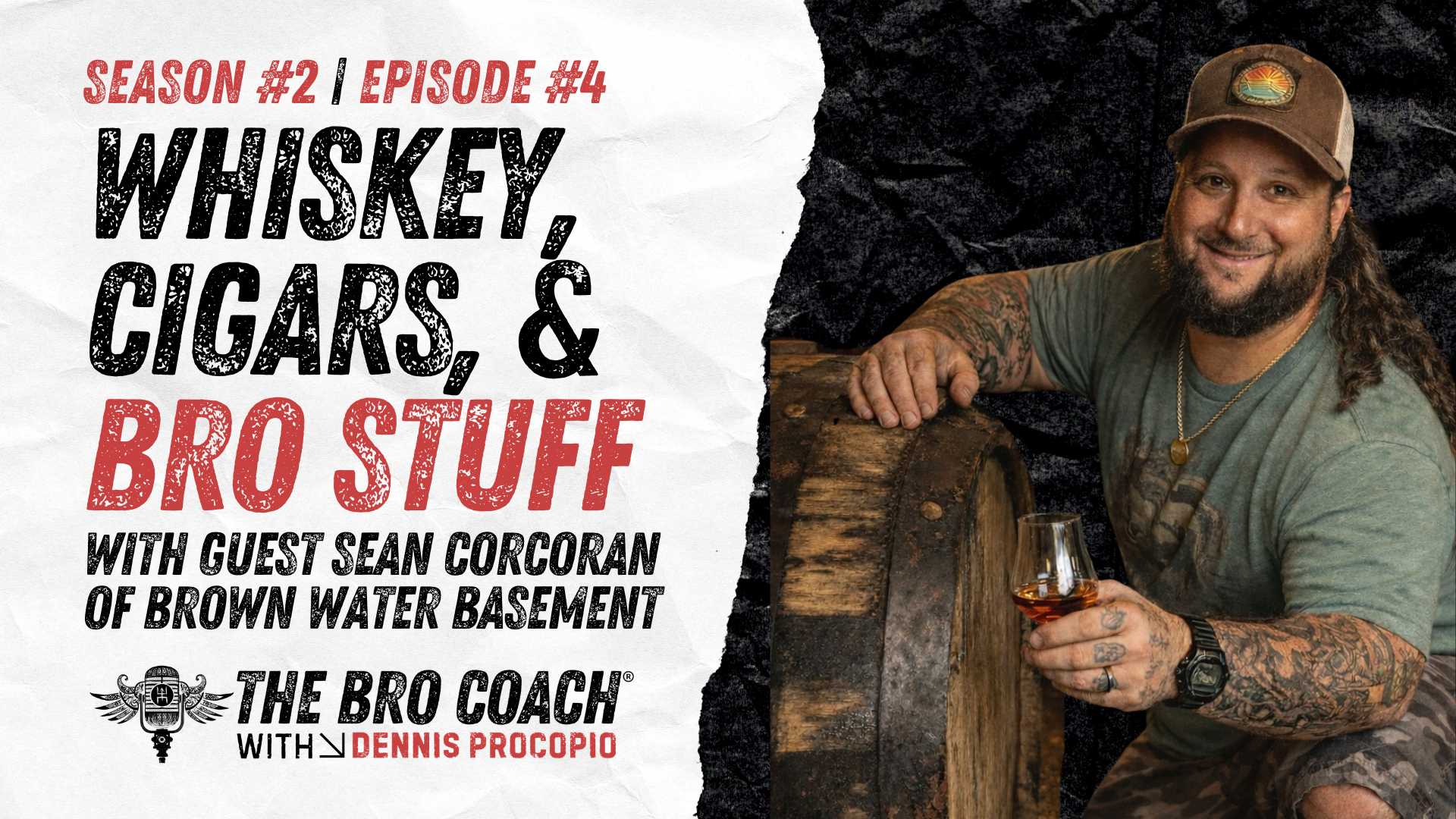
Bro Coach® Dennis Procopio sits with Sean Corcoran of Brown Water Basement on whiskey, cigars, and brotherhood for men chasing quality and real connection.

Whiskey, Cigars, and Bro Stuff, with Guest Sean Corcoran of Brown Water Basement | Season 2, Episode 4


SUMMARY

Most men chase the wrong things, and they pay full price for it. They camp out three days for one bottle, drop fifty grand on cars that depreciate the moment they leave the lot, and chase status while their friendships rot from neglect. In Season 2, Episode 4 of The Bro Coach® Podcast, Dennis Procopio and co-host Charles Leadbetter sit down with Sean Corcoran, founder of Brown Water Basement, to talk about why men are starving for something more than the chase.

Sean built his single-barrel whiskey selection business by taking the guesswork out for guys who want quality without grinding for it. He explains the real difference between whiskey, bourbon, and rye, why bourbon laws were written to protect people from rotgut, and how the bourbon and cigar world has become a quiet ritual that’s bringing men back together at a time when most male friendships are surface-level at best.

The conversation moves through the stuff men actually wrestle with. How a sober coach in his fifties still buys good bourbon for his wife. How a 39-year-old small business owner from Huntsville built relationships with doctors, lawyers, and engineers without abandoning his blue-collar roots. How a six-year-old being suspended in kindergarten still has a chance because his father shows up. How fatherless men have to be raised by their communities, and how that’s the whole damn job of older men now: stepping in, modeling discipline, and walking younger guys through the rites of passage no one bothered to give them.

This episode is for the man who’s done pretending. The professional who wants better friendships. The blue-collar father who knows quality matters. The recovering chaser who’s ready to slow down and taste what’s actually in the glass. Pour something good, light up if that’s your thing, and listen in.

Key Topics

  • How single-barrel whiskey selection takes the chase and guesswork out for serious drinkers
  • The real legal difference between whiskey, bourbon, and rye, and why bourbon laws matter
  • Why cigars and bourbon are becoming the new ritual for real male brotherhood
  • Bridging blue-collar and professional worlds without losing your roots or your edge
  • The role of older men stepping in as father figures during boys’ rites of passage
  • How a small whiskey business grew out of a Jeep forum and one DM

Resources

Sign In

Register

Reset Password

Please enter your username or email address, you will receive a link to create a new password via email.